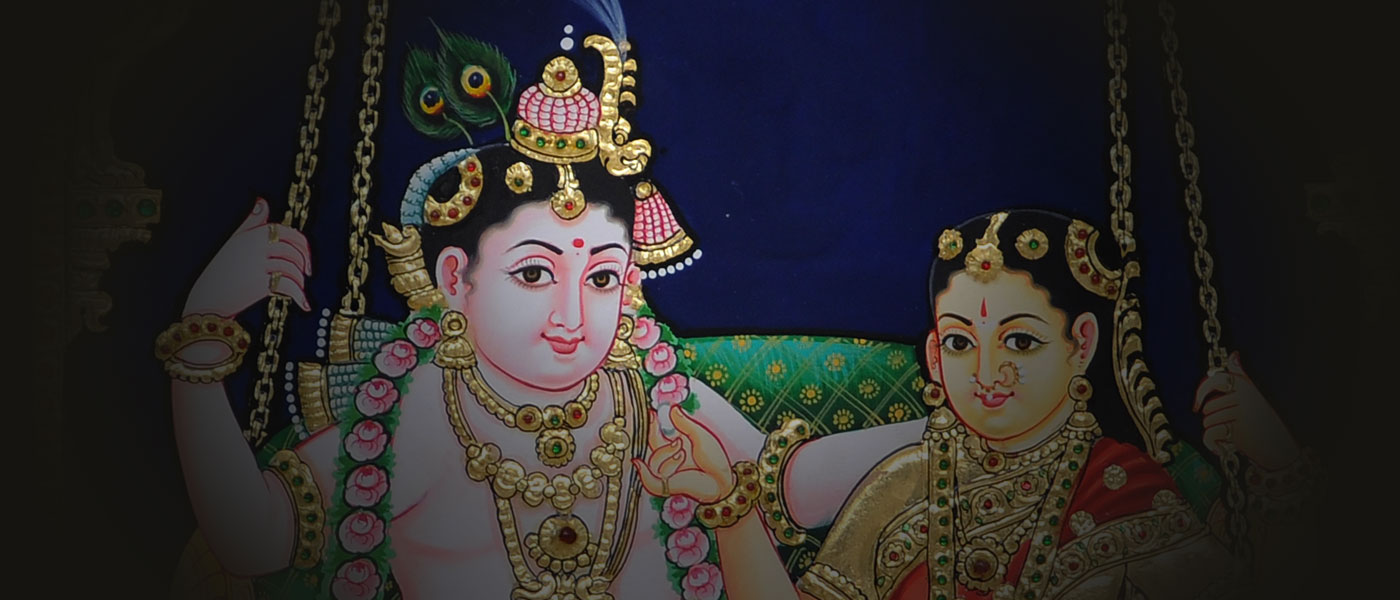
Thanjavur paintings are done on canvasses. The canvas for a Thanjavur painting is usually a plank of wood (originally wood of the Jackfruit tree was used, now it is plywood) over which a layer of cloth is pasted with Arabic gum.
The cloth is then evenly coated with a paste of limestone and a binding medium and let to dry. The canvas is now ready for painting. The artist then draws a detailed sketch of the painting on the canvas. A paste made of limestone and a binding medium are used to create a 3D effect in embellishing and ornamenting the theme using a brush. Gold leaves and gems of varied hues are used in selected areas like pillars, arches, thrones, dresses, etc. The shine and glean of the gold leaves used by the Thanjavur style paintings last forever. Finally, colours are applied on the sketch. In the past, artists used natural colours like vegetable dyes, whereas the present day artists use chemical paints which enhance the sharpness and provide better shade contrasts. The old Tanjore artists restricted their scope to divine figures and used to mix their natural colours. The modern ones have, of course, no need to do so. What has survived in this convention is the choice of colours for painted personalities or objects.